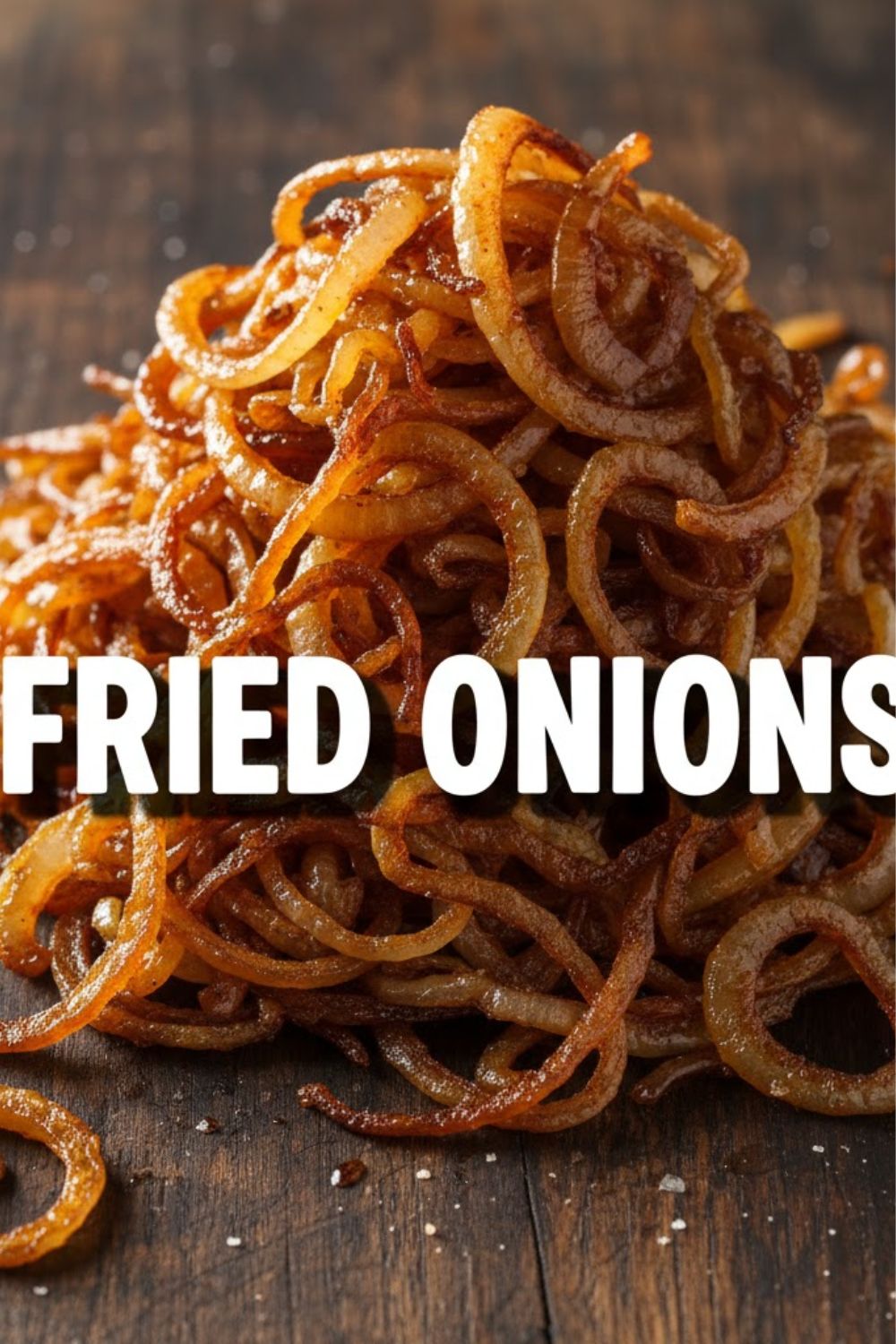
Master Golden Fried Onions: Essential for Biryani & Curries
Few ingredients possess the transformative power of perfectly golden fried onions. From humble beginnings as a simple bulb, they emerge caramelized, deeply flavorful, and irresistibly crispy, ready to elevate a multitude of dishes. If you've ever savored a rich biryani or a complex curry, you've likely experienced the magic that these fried onions bring – a symphony of sweetness, umami, and texture that forms the very backbone of the dish.
Mastering
how to make fried onions is a fundamental skill for any aspiring home chef, especially those venturing into the vibrant world of South Asian and Mughlai cuisine. They aren't just a garnish; they're an integral flavor builder, lending depth and a luxurious mouthfeel that cannot be replicated. While traditional methods involve careful stovetop frying, innovative techniques now offer hands-free solutions for the busy cook. Let's delve into the art and science of creating these golden jewels.
Why Golden Fried Onions are a Culinary Essential
Golden fried onions are far more than just a topping; they are a foundational flavor enhancer that can dramatically alter the profile of a dish. Their importance is particularly pronounced in Biryani, where they are layered within the rice and meat, contributing both color and a crucial savory-sweet note. Similarly, in many traditional curries and kormas, they form the aromatic base, often blended into a paste to thicken and enrich the gravy with their unique caramelized essence. This process is what imparts that signature "royal feel" to many Mughlai recipes, transforming a simple stew into a decadent feast.
Beyond these specific applications, the versatility of fried onions knows no bounds. They can be stirred into hearty stir-fries, added to comforting stews, sprinkled over savory pasta dishes, or even used as a secret ingredient in ground meat recipes. Their deep, umami-rich flavor, coupled with a delightful crispness, adds a layer of complexity that elevates everyday cooking to gourmet levels. They are the unsung heroes that provide the savory depth and subtle sweetness often missing in dishes that lack that certain "je ne sais quoi."
The Traditional Way: Crafting Crispy Caramelized Onions on the Stovetop
For centuries, the stovetop method has been the gold standard for producing exquisite fried onions, and for good reason. It offers precise control over the browning process, allowing you to achieve that perfect crispness and deep caramelization. While it requires a bit more attention, the results are undeniably rewarding.
Preparation is Key: Slicing and Salting
The journey to perfect fried onions begins with proper preparation. Start by selecting firm, fresh onions; yellow or white onions are generally preferred for their balance of sweetness and sharpness. The most crucial step is uniform slicing. To ensure even cooking and maximum crispness, slice your onions as thinly and evenly as possible, preferably vertically from root to tip. Inconsistent slices will lead to some pieces burning while others remain undercooked.
Once sliced, transfer them to a bowl and add about 1 tablespoon of salt for every 500 grams of onions. This might seem counter-intuitive, but massaging the onions with salt for about a minute is a game-changer. The salt draws out excess moisture from the onion cells through osmosis. This preliminary dehydration is vital because moisture is the enemy of crispiness. By removing it beforehand, you shorten the frying time and ensure a much crispier end product.
Frying Technique: Patience and Precision
Now, it's time to fry. Heat a generous amount of oil in a wide, heavy-bottomed wok or deep pan. For truly crispy, deep-fried onions, you'll need enough oil to submerge them partially or fully. Canola, vegetable, or sunflower oil are excellent choices for their high smoke points and neutral flavor. The oil should be hot, but not smoking – ideally around 325-350°F (160-175°C).
Before adding the onions, take handfuls of the salted, sliced onions and firmly squeeze out any remaining moisture. This step, combined with the earlier salt massage, guarantees maximum crispness. Add the squeezed onions to the hot oil in batches, ensuring you don't overcrowd the pan. Overcrowding will drop the oil temperature and lead to steamed, rather than fried, onions.
Fry the onions on a low to medium flame. This slow, steady cooking is essential for developing their sweet, caramelized flavor and achieving an even golden-brown color. Resist the urge to crank up the heat; high heat will burn the outside before the inside is cooked through. Stir occasionally to ensure all sides brown uniformly. The onions will gradually soften, then turn translucent, then a pale yellow, and finally, a beautiful golden brown. Remove them from the oil just before they reach your desired shade of brown, as they will continue to darken slightly from residual heat once removed. Use a slotted spoon to transfer them to a plate lined with paper towels to drain excess oil.
The Hands-Free Revolution: Frying Onions in a Rice Cooker
While the traditional method yields fantastic results, sometimes convenience is king. For those busy days or when you simply prefer a more hands-off approach, the humble rice cooker, specifically a multi-purpose fuzzy logic model with a "Bake" function, presents an unexpected but brilliant solution to
how to make fried onions without constant supervision.
Why a Rice Cooker? The Advantage of Set-It-and-Forget-It
You might wonder, "Why fry onions in a rice cooker when I have a frying pan?" The answer lies in its distinct advantage: automation. Unlike a stovetop where onions can quickly go from perfectly golden to burnt in mere moments, a rice cooker set to its "Bake" function offers a controlled environment that prevents scorching. You can truly set it and walk away, returning to perfectly cooked onions without the stress of constant monitoring. It's an ingenious way to multitask and simplify your cooking process. This method perfectly aligns with the principles discussed in
Hands-Free Fried Onions: The Easy Rice Cooker Method.
Step-by-Step Rice Cooker Frying
1. **Preparation:** Peel and chop your onions into small, even pieces. Unlike the long, thin slices for traditional deep-frying, smaller pieces work better in the rice cooker for uniform cooking.
2. **Oil Up:** Pour oil into the rice cooker bowl. A good rule of thumb is about 1 tablespoon of oil for every large onion you're using.
3. **Add Onions:** Add the chopped onions to the bowl, spreading them out evenly across the bottom.
4. **Crucial Step: Lid Open!** This is paramount. The lid must remain open throughout the entire cooking process. Closing it will trap steam, causing the onions to steam and soften rather than fry and caramelize. It might feel counter-intuitive, but an open lid is the secret to success with this method – a point detailed further in
Fry Onions Without Burning: The Rice Cooker's 'Bake' Secret.
5. **Set and Go:** Set your multi-purpose fuzzy logic rice cooker to the "Bake" function and set the timer for 30 minutes. Press "Start."
6. **Optional Stir:** If you want very uniform browning, you can give the onions a stir once halfway through (around the 15-minute mark), but it's not strictly necessary. The rice cooker’s even heat distribution will generally ensure good results even without stirring.
7. **Ready When You Are:** Once the timer beeps, your golden fried onions are ready! Most rice cookers will automatically switch to a "Keep Warm" function, so they'll stay perfectly warm until you're ready to use them.
This method is a fantastic time-saver, allowing you to focus on other aspects of your meal preparation while the rice cooker diligently transforms your onions into golden perfection.
Mastering Storage and Usage of Your Golden Treasure
Once you've dedicated the time and effort to create a batch of perfect golden fried onions, knowing how to store and use them effectively is key to maximizing their value.
Cooling and Storage for Maximum Crispness
After removing your fried onions from the oil or rice cooker, spread them out on paper towels to drain any excess oil and allow them to cool completely. This cooling process is crucial for them to firm up and become delightfully crispy. Attempting to store them while warm will trap moisture and make them soggy.
Once cooled, transfer them to an airtight container. For short-term use (a few days), they can be stored at room temperature in a cool, dry place. For extended freshness and crispness, consider storing them in the refrigerator, where they can last for up to a week. For even longer storage, these golden treasures can be frozen in an airtight bag or container for several months. When ready to use from the freezer, simply thaw them at room temperature or gently reheat them. If they lose a bit of their crunch after storage, a quick toast in a dry pan or a few minutes in a low oven can help reactivate their crispness.
Creative Uses Beyond Biryani
While their role in biryani and curries is indispensable, golden fried onions are incredibly versatile. Don't limit their potential!
* **Garnish Extraordinaire:** Sprinkle them over soups, stews, lentil dals, or even salads for an instant boost of flavor and texture.
* **Sandwich & Wrap Enhancer:** Add them to your sandwiches, burgers, or wraps for a gourmet twist.
* **Savory Topping:** Use them as a topping for baked potatoes, roasted vegetables, or even scrambled eggs.
* **Flavor Base:** Blend them into a paste with yogurt or other spices to create a rich base for dips, marinades, or gravies.
* **Stir-fry Secret Weapon:** Toss them into your next stir-fry towards the end of cooking for added depth.
Mastering
how to make fried onions, whether through the attentive grace of the stovetop or the ingenious automation of a rice cooker, unlocks a world of flavor and culinary possibilities. These golden strands are more than just an ingredient; they are a testament to the power of simple techniques creating profound tastes. Embrace the process, experiment with both methods, and elevate your home cooking with this essential, delectable staple.